
Topic: Pullman Farmers Market / Market on Main
If you’ve ever thought, “How hard can it be to start a farmers market?” the short answer is: harder than it looks. But it’s also more rewarding than we imagined.
This is the story of how a small group of people, a lot of vendors, and an entire community helped bring a farmers and makers market back into downtown Pullman, from a hidden lot behind a bank to a fully activated indoor space at 300 E Main.
Along the way, we’ve had support from US Bank, Washington Trust Bank, Pullman Civic Trust, the Downtown Pullman Association, the building owner at 300 E Main, and many others. This has never been a solo project. It’s very much a Pullman project.
The “Market Behind the Bank”
The vision was simple: a real Pullman farmers market.
Local food. Local makers. Local music. A place where you see your neighbors and actually stop to talk to them.
The reality is that we started behind a bank, down a lane most people didn’t know existed. There was no infrastructure:
No power.
No storage.
No furniture.
Very little budget.
So we did what small communities and small businesses do when they decide something is worth doing: we pooled time, resources, and whatever tools we had.
We worked with the Downtown Pullman Association to make sure seating and tables were available so customers could linger and vendors didn’t have to stand all day.
We sorted out power where there was none, including bringing in a generator so food vendors could cook and makers could run their equipment.
We dealt with insurance, permits, and all the unglamorous details that are required to keep a market safe and compliant.
Every week had its own curveballs, weather, last-minute schedule changes, people trying to find a place that was literally behind a bank. The honest truth is that the market only worked because a lot of people refused to give up on it.
The Human Side
Behind the scenes, we had to grow up quickly as an organization.
Early on, we made a hard decision to make a leadership change after discovering serious financial issues. This is not about calling anyone out; it’s about acknowledging that if a market is going to last, it has to be run with clear governance, transparent finances, and accountability.
From that point forward, we began treating the market as what it really is:
A startup community asset, not a casual project.
That meant focusing on:
Basic governance and decision-making
Clean, transparent financial practices
Clear roles and responsibilities
A bias toward action, not endless discussion
We ended up with a small team where each person brought something different: finance, food and kitchens, farming, business and events. The culture we agreed on was simple:
If something needs doing, we do it.
If trash needs hauling, we haul it.
If tables need moving, we move them.
If a tough conversation is needed, we have it.
That attitude, combined with support from partners and volunteers, is the reason the market didn’t stall in its first season.
Why We Treated the Market Like a Startup
A bit of context: I’ve run my own business since 2009, worked in startups, and helped build out creative spaces in bigger cities. The common thread in all of those experiences is that ideas are only as good as the work behind them.
The farmers market is no different.
What makes it real is:
Showing up week after week
Being reachable when things break or plans change
Fixing problems quickly instead of letting them pile up
Being willing to do the unglamorous jobs
We launched with what we had, listened to vendors and customers, and adjusted as we went. Some ideas worked. Others didn’t. The important thing was to keep moving forward and keep the market safe, welcoming, and financially responsible.
From Pop-Up Market to Community Living Room
As the outdoor season went on, we stopped thinking of it as “just” a farmers market and began seeing it as a community living room in downtown Pullman.
We hosted music.
We welcomed new vendors trying their first market.
We watched people discover local farms, artisans, and makers they’d never heard of.
One moment that really stood out was when every city council candidate showed up after a simple invitation, not for a formal forum, but because they recognized that this is where the community was gathering. People were buying bread and carrots, yes, but they were also talking about the future of the city. That’s when it felt like the market was becoming a real civic space.
Planning for Winter
Then winter started to loom.
Anyone who has run a market knows what happens when the weather changes: vendors want to know the plan, customers are less likely to stand in the cold, and momentum can disappear quickly.
Our options were:
Shut down and restart in the spring, or
Find an indoor solution and see if Pullman would support a winter market.
We chose to try the harder path and go indoors.
Looking around downtown, we saw vacant buildings, including the former bank at 300 E Main. Plenty of square footage, not much life. Instead of treating that as a barrier, we saw an opportunity to activate space and support both vendors and downtown at the same time.
Bringing 300 E Main Back to Life
The goal was never just “get a roof over our heads.” It was to make 300 E Main safe, welcoming, and usable for the public.
That required real investment of time and resources:
Addressing ceiling and water-damage issues
Securing and organizing wiring
Ensuring exit signage and safety standards were met
Getting hot water and restrooms operational again
Coordinating with the building owner, city officials, and inspectors
Sorting out insurance and building occupancy requirements
There is a long list of people behind the scenes who helped make this happen, from the building owner to city staff to volunteers and tradespeople. Without that collaboration, we wouldn’t have passed our final inspection the day before opening.
Opening Day at the Indoor Market
Opening day at the indoor market felt like a test of everything the community had invested.
Would people come?
Would vendors have a good day?
Would the space feel alive?
Here’s what we saw:
Roughly 450 visitors came through the doors.
Vendors reported strong sales overall, and when someone struggled, we discussed how to support them with business coaching, not blame.
Customers said things like, “I had no idea this building could feel like this.”
The building went from dark and underused to bright, active, and full of conversation. There were kids, families, students, long-time residents, and new arrivals all sharing the same space. We also started hearing from additional vendors who wanted to join.
It wasn’t perfect. We still had signs to improve, traffic patterns to tweak, and systems to refine. But it clearly showed that an indoor winter market in downtown Pullman is not just possible, it’s valued.
What It Really Takes to Make a Farmers Market Work
If you strip away the romance, a farmers market is logistics, relationships, and cash flow.
You have to:
Earn the trust of vendors when you can’t yet promise big sales
Earn the habit of customers so they come back week after week
Navigate city regulations, insurance, and building safety
Provide tables, chairs, power, bathrooms, and music that people barely notice unless they’re missing
Handle weather, last-minute cancellations, and the occasional conflict with patience and fairness
And you have to accept that if something goes wrong, the responsibility lands on the organizers. That comes with the territory.
So why do it?
Because when it works, it does more than provide a shopping experience.
It gives local farmers and makers a workable sales channel.
It creates consistent foot traffic downtown.
It gives residents a reason to park once, walk, talk, and feel like they live in a community, not just pass through one.
What We’ve Learned So Far
A few lessons have guided us:
Work over ideas.
Ideas matter, but follow-through matters more. The market exists today because people, the vendors, volunteers, partners, and customers showed up repeatedly, even when it was hard.
Shared ownership over titles.
No one is above stacking chairs, cleaning bathrooms, or taking out trash. That shared responsibility builds resilience.

Start simple, then improve.
We focused first on making the market safe, compliant, and functional. Every week, we try to make at least one thing better for vendors and customers.
Put community at the center.
The goal is not to build a monument; it’s to create something local people actually use and feel proud of.
Stay transparent and disciplined with money.
We learned early how important sound financial practices are. Clean books, clear rules, and accountability are non-negotiable if this is going to be a lasting community asset.
What’s Next — And How Pullman Can Shape It
We see this indoor market season not as the finish line but as a proof of concept.
It shows that:
Pullman will support a downtown farmers and makers market.
Vendors can succeed here in all seasons.
Underused buildings can become active community spaces.
Partnerships between banks, nonprofits, property owners, the city, and volunteers can create something meaningful in a short amount of time.
To turn this from a promising start into a long-term institution, we’ll need continued collaboration:
From residents, by showing up regularly and inviting friends.
From vendors, by continuing to grow, adapt, and invest in the space.
From local leaders, funders, and property owners, by seeing the market as a key piece of downtown revitalization, local food systems, and helping us plan for sustainable operations.
If you live here, you’re already part of the story.
You support the market when you buy your bread and carrots here instead of somewhere else, when you talk to a vendor about their farm, when you bring visiting family to see “our downtown market,” and when you simply show up on a Saturday instead of assuming nothing is happening.
We’re incredibly grateful to everyone in Pullman who has taken a chance on this experiment, thank you to vendors, customers, city staff, building owners, sponsors, volunteers, musicians, and neighbors. You’ve turned a hidden lot and an empty bank into a community space.
Now it truly belongs to Pullman.
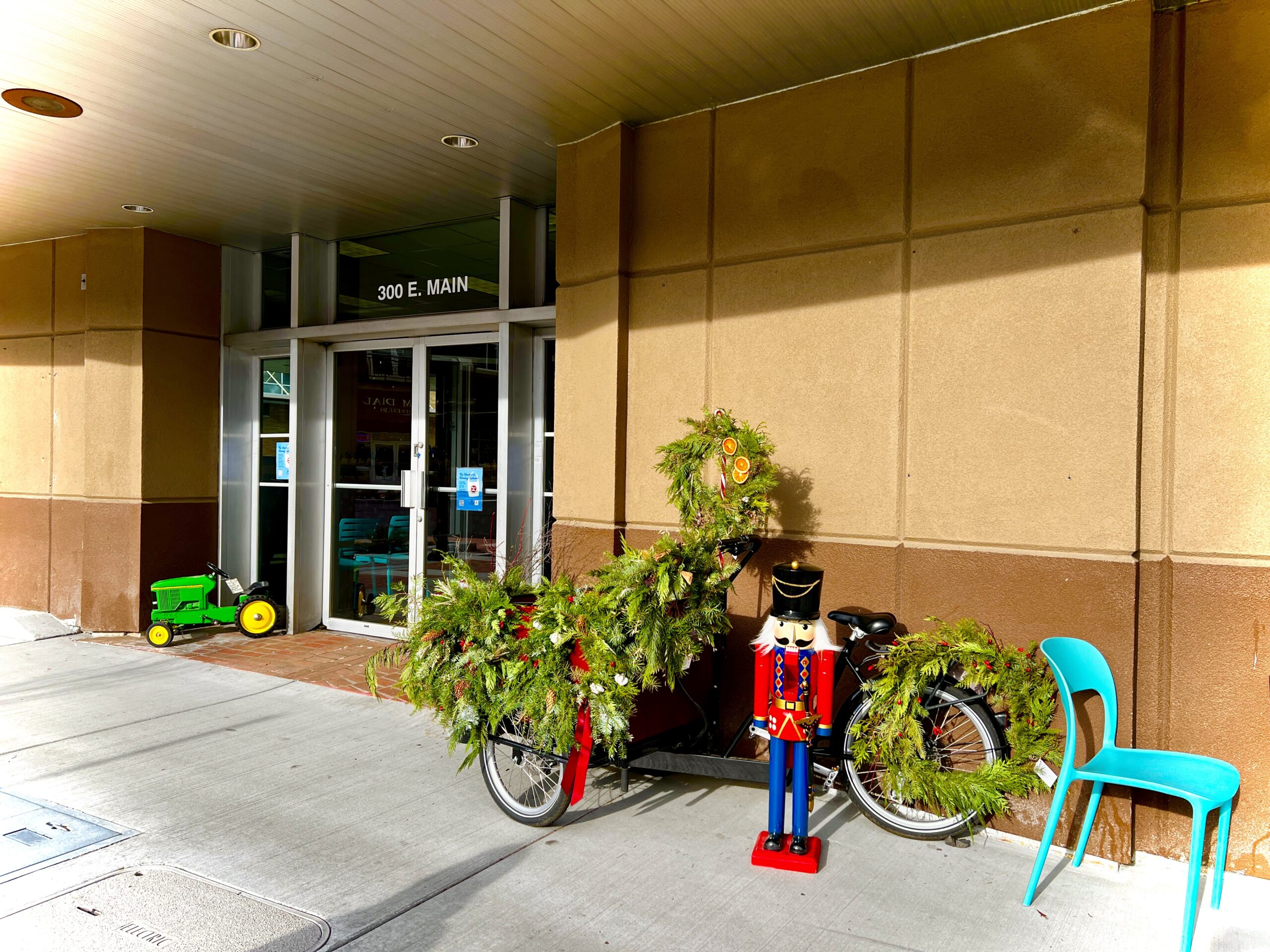
See you at 300 E Main, Saturdays from 10 am–3 pm.
(For Winter 2025–2026, we only plan to be closed on Saturday, December 27. Every other Saturday, we look forward to welcoming you.)
2 responses to “How We’re Building a Farmers Market in Pullman”
What a great article. Thank you for this inspiring description of behind the scenes, in front of the scenes, the scene/vision for the future, and the calm, reasonable, responsible, compassionate foundation being provided for this wonderful new asset to Pullman.
Thank you Mary! And we agree, it’s all about the community. Commerce is great but entrepreneurship, innovation and our neighbors make it all worth it!