
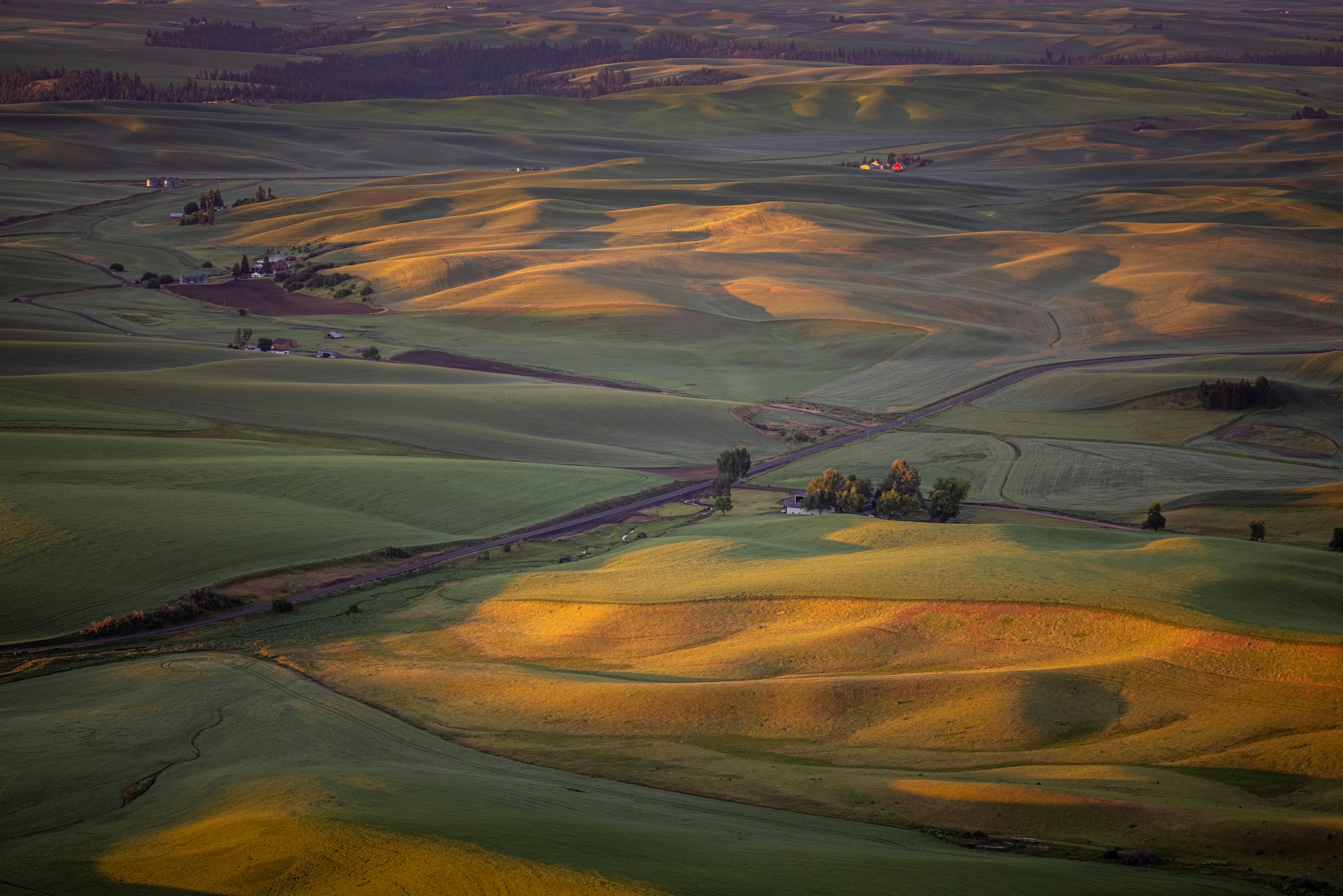
Why Moscow and Pullman should be partners in building a stronger regional economy, not competitors fighting over the same Saturday morning.
By Paul Warner | Pullman Market on Main
There’s been some conversation recently about Pullman Market on Main operating on Saturdays at the same time as the Moscow Farmers Market. Some have suggested that our market is taking customers away from Moscow vendors and hurting their sales, or that scheduling two markets at once was a failure of planning.
I understand why people are concerned. Small businesses are hard to run. Farmers, food producers, artists, and entrepreneurs put enormous time, money, and energy into their products. When sales decline, it hurts, and when you’re struggling, it’s natural to look for an explanation.
But I believe we’re asking the wrong question. Instead of asking why Pullman would have a farmers market on the same day as Moscow, perhaps we should ask:
“Why wouldn’t we want more farmers markets, more customers, more opportunities for entrepreneurs, and more reasons for people to visit the Palouse?“
This doesn’t have to be a competition between two communities. It can be an opportunity for both.
Let’s give Moscow the credit it deserves
The Moscow Farmers Market is extraordinary. Founded in 1976, it has grown into the most recognized and beloved farmers market in the region. In 2012 it expanded onto Main Street, more than doubling its vendor spaces from 42 to 99. It has a 50-year history, a remarkable collection of farmers, food producers, artisans, and musicians, and generations of customers who treat Saturday in downtown Moscow as a tradition.
People don’t go there because it’s the only place to buy vegetables or handmade goods. They go for the atmosphere, the people, the music, the food, and the tradition. You don’t erase 50 years of community loyalty by opening a small market eight miles away, and we wouldn’t want to.
I’m a fan of the Moscow Farmers Market. Our goal has never been to diminish it. We want Pullman to have something special of its own, too.
How Pullman Market on Main got started
Pullman Market on Main began in 2025 with a handful of vendors in a parking lot behind a bank. Before our first market day, we talked with and learned from the organizers of the Moscow Farmers Market, because we respected what they had built.
We had little infrastructure, limited resources, and a great deal to figure out. There was no financial windfall waiting for the organizers. We put in our own time, money, and resources because we believed Pullman needed a place where local growers, artisans, food producers, and aspiring entrepreneurs could meet customers and build their businesses. We worked with community partners, property owners, businesses, volunteers, and city officials to make it happen.
Our first year was challenging. We had to build awareness, earn customers’ trust, and convince vendors to take a chance on something new. Then we did something more ambitious. Instead of closing when the outdoor season ended, we moved indoors to 300 E. Main Street so vendors could keep selling and building their brands through the winter. Our first indoor market welcomed approximately 450 visitors, and it showed that people in Pullman wanted a local market of their own.
This is what community economic development looks like. It’s rarely glamorous, it takes tremendous effort, and it starts with people willing to invest in something they believe could make their hometown better.
We wouldn’t tell a new restaurant not to open because another restaurant eight miles away serves food. We wouldn’t tell someone starting a business to wait until a more established business decides it’s convenient. Why should farmers markets be different?
Saturday isn’t an accident
One criticism is that Pullman should simply operate on a different day. But consider how people actually live. During the week, they’re working, going to school, raising families, and running businesses. Sundays are for church, family, and rest. For many households, Saturday is the most convenient day to get out, shop, and spend time together. That’s why Saturday markets are popular in the first place.
Moving Pullman’s market to a less convenient day just to avoid overlapping with Moscow could mean fewer visitors, fewer sales, and a less sustainable market.
The hours make this easy. Moscow’s market runs 8 a.m. to 1 p.m., and Pullman Market on Main runs 9 a.m. to 1 p.m. Someone can browse Moscow first thing, drive the eight miles to Pullman, and still have hours to shop here, or start in Pullman and reach Moscow before it closes.
Customers are perfectly capable of visiting both. Someone can have breakfast and shop in Moscow, drive to Pullman, explore our vendors, have lunch, and visit other downtown businesses. Or they can start in Pullman and finish in Moscow. Some people will visit one market, some will visit both, and others who wouldn’t have traveled to Moscow in the first place may discover local producers because a market is closer to home. This isn’t a choice between two markets. It can be two experiences within one regional Saturday.
What if more markets mean more customers?
Research suggests they might. For Pullman residents who weren’t making the drive to Moscow, a market close to home matters. A Florida study published in Renewable Agriculture and Food Systems found that an additional farmers market within five kilometers of a household was associated with a 3.67% increase in the expected probability of shopping at farmers markets. More accessible markets can help create more market shoppers.
A separate Journal of Extension study of New Jersey market patrons found that most had attended between two and four different markets. People already shop at more than one, and they appreciate having options. A USDA Economic Research Service review also notes that farmers market shoppers spend money at neighboring businesses, so the benefit extends beyond the market itself.
Of course, no research (See full list below) guarantees that every market will succeed or that no vendor will feel competition. Those are real business concerns. But there is a big difference between acknowledging that competition is possible and claiming that one specific market is responsible for another business’s declining sales. That claim requires evidence.
If we want to understand changing sales patterns, let’s look at customer counts, spending, weather, product demand, pricing, university schedules, consumer habits, and the broader economy. Let’s ask customers where they shop and what they’re experiencing. What we shouldn’t do is blame a new community market without data showing that it caused the problem.
There are more entrepreneurs than available spaces
The Moscow Farmers Market is so popular that demand for vendor spots regularly exceeds what it can accommodate. In January 2026, local reporting described more than 80 prospective new vendors seeking entry, including more than 70 nonagricultural applicants. Moscow market officials also reported that vendors were waitlisted on 72% of market dates in 2025.
That shows how much entrepreneurial interest exists in our region. It also raises a question. What happens to the makers, growers, bakers, and artists who can’t get a space? Do we tell them to try again next year? Suggest they abandon their business ideas? Or encourage more places where they can meet customers, improve their products, and grow?
A new market can be a tremendous opportunity for someone who has never sold a product publicly. It’s where a home baker discovers a real customer base, where an artist earns their first meaningful revenue, and where a small farm gains the confidence to expand production. Some established vendors may choose to work multiple markets, with extra staff, family members, or different scheduling. Not everyone can do that, of course, because staffing and transportation cost money. But more options give entrepreneurs more control over how and where they build their businesses.
Variety attracts people
One great bar in a neighborhood is nice. Six great bars within walking distance of each other can turn that neighborhood into a destination. People come because they have choices. They bring friends, stay longer, discover businesses they hadn’t planned to visit, and build habits around the experience.
It’s the same reason malls have food courts. A burger place, a pizza place, a sandwich shop, and a taco counter compete for customers within a few feet of each other. A family of five might have five different ideas about lunch, and a food court gives them all a choice. That makes the whole mall a more attractive place to go. Nobody suggests the pizza place should close whenever the burger place is open.
Economists call this agglomeration. Research in American Economic Review: Insights examined how restaurants in Milan clustered together after restrictions on their proximity were removed. Research on shopping malls has identified tenant variety as an important factor in drawing customers. And University of Idaho economist Jason Winfree and Connor Allen published a study called The Economics of Food Courts, which models how competing vendors in a shared destination affect one another and how a collective reputation shapes what each one invests.
Businesses can compete for individual sales while making the whole destination more attractive. People aren’t always choosing between businesses. Sometimes they’re choosing where to go in the first place.
Think regionally
Farmers markets can work on a similar principle. Imagine promoting a Saturday in our region that includes markets in Moscow, Pullman, Colfax, Palouse, Potlatch, Lewiston, and other nearby communities. Each has its own personality. Moscow offers its remarkable downtown market tradition. Pullman offers a growing community of farmers, makers, university students, and local businesses. Colfax and Palouse have their own distinctive small-town character. Potlatch has its own history and community appeal. Lewiston brings another population center, agricultural community, and set of experiences.
Regional writers are already making this pitch. A September 2026 travel article promotes visiting both the Moscow and Pullman markets on the same Saturday, then continuing on to Steptoe Butte.
Instead of looking at these places as competitors, we could build a regional identity around them: Come explore our region. Spend your Saturday discovering our markets, restaurants, shops, farms, galleries, and communities.
The goal is a bigger table
We have two major universities, talented entrepreneurs, remarkable agricultural producers, established businesses, creative people, and communities with a genuine commitment to local life. There is substantial purchasing power and economic opportunity here, even though that prosperity isn’t distributed equally and many households and businesses face real financial pressures.
We don’t have to operate as though every dollar spent in Pullman is a dollar taken from Moscow. The goal is a bigger table, not a smaller slice for everyone. That means:
- Encouraging residents to spend more of their discretionary money locally.
- Attracting visitors from Spokane, the Lewiston-Clarkston Valley, and surrounding communities.
- Giving university students and their families more reasons to explore our downtowns.
- Helping people discover a local bakery, farm, artist, or restaurant instead of defaulting to a national retailer.
We have to stop treating local customers as a fixed resource that can only be divided into smaller and smaller pieces. New experiences create new shopping habits, new customer relationships, and new economic activity. That’s how local economies grow.
Competition isn’t the enemy. A lack of cooperation is.
Markets do compete for some customers, and vendors can absolutely have disappointing sales. A small business owner struggling to cover payroll or ingredient costs doesn’t need a lecture on economic theory. They need customers, practical support, and opportunities to succeed. That’s why I’d rather see market organizers work together on solutions than argue over who deserves Saturday.
Imagine if our markets actively promoted one another. We could:
- Create a regional Saturday market guide that highlights vendors and experiences in each community.
- Coordinate special events and shared marketing campaigns that invite visitors to explore more than one downtown.
- Share practical knowledge about vendor development, food safety, business operations, and customer engagement.
- Coordinate customer surveys and aggregate vendor feedback to understand how people actually shop across the region.
A market provides possibility. Long-term success also takes strong products, thoughtful pricing, good customer service, consistent marketing, and the ability to adapt. Those are skills we can help one another develop. Imagine what we could accomplish if we put as much energy into attracting new customers to the region as we sometimes spend worrying about where existing customers might shop.
Supporting Pullman Market on Main doesn’t require anyone to stop supporting Moscow. I’d encourage everyone to visit both. Buy bagels from a local baker. Pick up produce from a nearby farmer. Discover a new artist. Have breakfast downtown. Invite friends from out of town. Make a Saturday of it. And if a favorite business is struggling, support it directly. Tell your friends, share its story, become a customer. That does far more good than asking another community to have fewer opportunities.
Let’s work together
We’re committed to celebrating the Moscow Farmers Market as it builds on its legacy for generations to come. We’re working to make Pullman Market on Main a lasting community institution and a source of local pride. And we’re cheering on farmers markets and local shopping in Colfax, Palouse, Potlatch, Lewiston, and throughout our region.
Those benefits won’t happen automatically. They’ll take cooperation, thoughtful marketing, investment, and a willingness to learn from what works and what doesn’t. But that’s a challenge worth taking on. Moscow and Pullman are neighbors, not enemies, and I’d much rather spend my Saturday building opportunities for our communities than arguing over who gets Saturday.
The future of the Palouse is something we build together.
See you at the markets.
Paul Warner
References and Further Reading
Moscow Farmers Market: History and Vendor Opportunities
1. City of Moscow — Farmers Market History
Official history documenting the market’s founding in 1976, its growth, and expansion.
2. Moscow Report — Farmers Market Vendor Roster and Handbook Updates (2026)
Reports on prospective vendors, market policies, and demand for participation.
3. Moscow Report — Farmers Market Waitlists and Vendor Capacity (2025)
Documents vendor waitlists during 72% of the 2025 market dates.
Farmers Markets: Consumer Behavior and Economic Benefits
4. Renewable Agriculture and Food Systems — Shopping at Farmers’ Markets: Does Ease of Access Really Matter?
Peer-reviewed research finding that additional nearby farmers markets are associated with increased consumer participation.
5. Journal of Extension — Farmers’ Markets: Consumer Trends, Preferences, and Characteristics
Research finding that most surveyed customers had visited two to four different farmers markets.
6. USDA Economic Research Service — Varied Interests Drive Growing Popularity of Local Foods
Examines the economic effects of local food markets, including additional spending at neighboring businesses.
Business Clustering, Food Courts, and the Power of Variety
7. American Economic Review: Insights — The Agglomeration of Urban Amenities: Evidence from Milan Restaurants
Academic research examining how restaurants cluster geographically and how these clusters influence differentiation and local commercial activity.
8. International Journal of Retail & Distribution Management — Pull Factors of the Shopping Malls: An Empirical Study
Research demonstrating the importance of tenant variety and shopping environment in attracting customers.
9. University of Idaho — The Economics of Food Courts
Peer-reviewed research by Jason Winfree and Connor Allen examining competition, product differentiation, and collective reputation among food court businesses.
Farmers Market Cooperation and Regional Marketing
10. Farmers Market Coalition — New Shopper Outreach Report
Discusses approaches to attracting new farmers market customers, including cross-marketing opportunities. The PDF’s location was identified, although I couldn’t fully retrieve it during this check.
11. A Palouse Saturday: Two Farmers Markets and a Butte
A September 2026 regional travel article explicitly promoting visits to both Moscow and Pullman farmers markets on the same Saturday, followed by a visit to Steptoe Butte.
The History of Pullman Market on Main
12. How We’re Building a Farmers Market in Pullman — Paul Warner
A firsthand account of establishing the market, overcoming startup challenges, developing partnerships, and creating an indoor winter market.
13. One Year of Pullman Market on Main — Eat Local First
Documents the market’s first year, its growth, its community involvement, and its ongoing mission to support local entrepreneurs.